
Do you want to keep your flowers looking fresh and vibrant for days, or even weeks? Whether it’s a stunning bouquet from a loved one or freshly picked blooms from your garden, preserving their beauty can feel like a challenge. The secret lies in flower food! But what if you don’t have those little packets that come with store-bought flowers? Don’t worry—this guide shows you step-by-step how to make flower food at home with simple, everyday ingredients. It’s cost-effective, eco-friendly, and just as effective as store-bought solutions.
Why Do Flowers Need Food?
The Science Behind Flower Food
Flowers may no longer be rooted in soil once they’re cut, but they still need nutrients to stay fresh and vibrant. Flower food mimics the essential elements provided by soil and water in nature. Here’s what flower food does:
- Provides Energy: Sugars in the food give cut flowers the energy they need to stay alive and maintain their vibrant colors.
- Balances pH Levels: Acids lower water pH, making it easier for flowers to absorb nutrients.
- Prevents Bacteria Growth: Antibacterial agents keep the water clean and free of harmful microorganisms that could clog stems.
Benefits of Using Flower Food
Using flower food prolongs the life of your blooms, keeps the water clear, and enhances the appearance of your flowers. Plus, when you make it at home, you have control over the ingredients, ensuring freshness and safety for your flowers.
Ingredients You’ll Need to Make Flower Food at Home
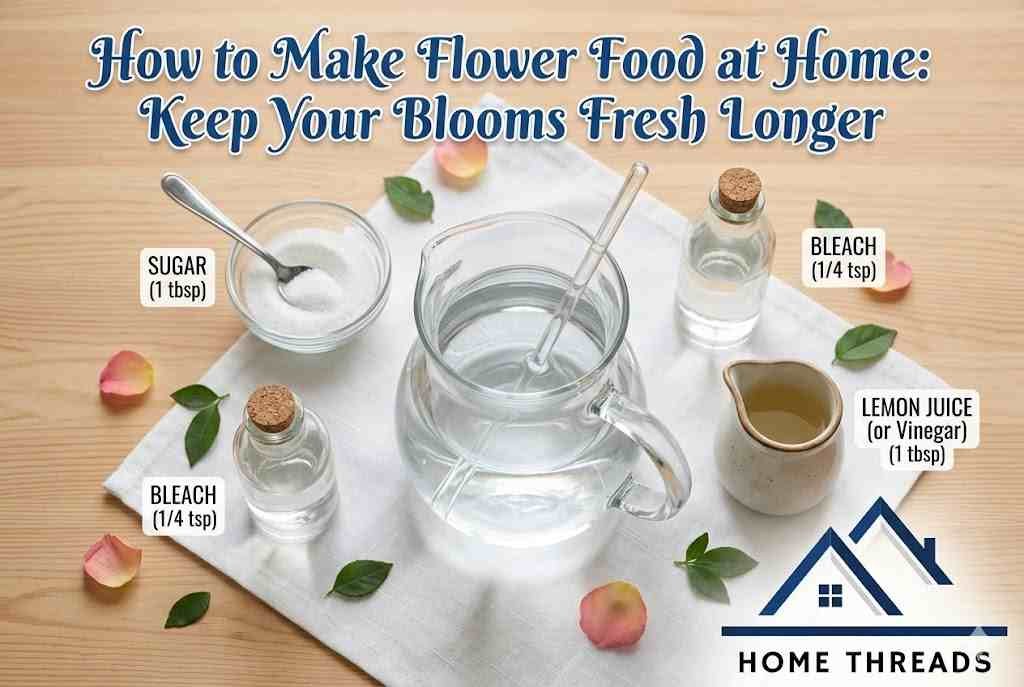
Making flower food at home is simple and requires only three main components. Here’s what you’ll need:
- Sugar: This provides energy to the flowers. You can use white sugar, honey, or even soda (like Sprite or 7-Up).
- Acidic Agent: Helps lower the pH of the water. Lemon juice or vinegar works perfectly here.
- Antibacterial Agent: Keeps the water clean and prevents bacteria from clogging the flower stems. You can use bleach, apple cider vinegar, or even crushed aspirin.
For those who prefer a natural alternative, eco-friendly options like honey and apple cider vinegar are excellent substitutes for bleach or synthetic chemicals.
Step-by-Step Guide: How to Make Flower Food at Home
Basic Flower Food Recipe
Ingredients:
- 1 tablespoon sugar
- 1 teaspoon lemon juice or vinegar
- 1 quart warm water
- Optional: 1/4 teaspoon bleach

Instructions:
1. Mix the sugar, acid, and antibacterial agent in a clean container.
2. Stir until the sugar dissolves completely.
3. Pour the solution into a clean vase.
4. Add your flowers and enjoy their extended freshness!
Advanced Recipe: Natural Flower Food
Ingredients:
- 2 tablespoons honey
- 2 tablespoons apple cider vinegar
- 1 quart warm water

Instructions:
1. Combine honey and apple cider vinegar in a mixing bowl.
2. Stir until fully blended.
3. Add the mixture to your vase water and place your flowers in it.
Experimenting with DIY Flower Food
As you experiment with how to make flower food at home, feel free to get creative. Here are some fun alternatives:
- Soda: Clear sodas like Sprite or 7-Up work wonders as they contain sugar and citric acid.
- Crushed Aspirin: Adding a crushed aspirin tablet can help lower the water’s pH and prevent bacterial growth.
Tips for Maximizing the Effectiveness of Flower Food
To make sure your flowers stay fresher for as long as possible, consider these practical tips:
- Use Clean Vases: Always start with a clean vase to prevent bacteria from spreading.
- Trim the Stems: Cut flower stems at a 45-degree angle to increase water absorption.
- Remove Foliage Below the Waterline: Leaves submerged in water can rot and promote bacterial growth.
- Change the Water Regularly: Refresh the water and flower food every 2-3 days to keep it clean and nutrient-rich.
- Store Flowers Properly: Keep your flowers away from direct sunlight, heat, and ripening fruits, which release ethylene gas that can shorten flower life.
Flower-specific tips:
- Roses: Remove thorns and leaves that may sit below the waterline.
- Tulips: Place them in cooler water to prevent drooping.
Common Mistakes to Avoid When Making Flower Food
Even with the best intentions, mistakes can happen. Here are common errors to avoid when learning how to make flower food at home:
- Using Too Much Sugar: Excess sugar can promote bacterial growth instead of preventing it.
- Skipping the Acidic Agent: Without an acid, the pH balance might not be optimal for flowers to absorb nutrients.
- Neglecting to Clean the Vase: Residual bacteria in an unclean vase can quickly ruin your efforts.
Benefits of Making Flower Food at Home
Creating your own flower food has many advantages:
- Cost-Effective: Homemade flower food uses ingredients you likely already have in your kitchen, saving you money.
- Eco-Friendly: Avoid single-use flower food packets and reduce waste by using natural ingredients.
- Customizable: Tailor your recipe to suit different types of flowers or personal preferences.
By knowing how to make flower food at home, you can confidently care for your flowers in a way that aligns with your needs and values.
Alternatives to DIY Flower Food
If you’re not ready to make flower food at home, here are other options to keep your flowers fresh:
- Store-Bought Flower Food: Convenient and effective, but it can be costly and less eco-friendly.
- Natural Methods: Add a copper penny to the vase to leverage its antibacterial properties.
- Plain Water: Simply changing the water frequently and trimming the stems can go a long way.
Conclusion
Flowers bring joy and beauty to any space, and keeping them fresh doesn’t have to be expensive or complicated. With this guide, you’ve learned the science behind flower food, simple recipes, and tips to maximize your flowers’ lifespan. Knowing how to make flower food at home empowers you to care for your blooms in a budget-friendly and eco-conscious way.
So why not give it a try? Experiment with different recipes, share your successes, and enjoy your long-lasting, vibrant flowers. Your blooms (and your wallet) will thank you!