


Introduction
Who doesn’t love the smell of freshly baked pizza wafting through the kitchen? Did you know that 80% of home cooks prefer homemade pizza over takeout for its freshness, flavor, and cost savings? Making pizza at home is not only a fun family activity but also a great way to customize your meal to suit your taste and dietary needs. Whether you’re a seasoned chef or a beginner, this guide will walk you through everything you need to know about crafting the perfect homemade pizza.
In this post, you’ll learn why homemade pizza is better than store-bought, the history of pizza, essential ingredients, step-by-step recipes, and creative topping ideas. By the end, you’ll be ready to impress your family and friends with your pizza-making skills.
Why Choose Homemade Pizza Over Store-Bought or Delivery?
Benefits of Homemade Pizza
Making pizza at home offers several advantages over ordering delivery or buying frozen options:
- Fresher Ingredients: You control the quality of every ingredient, ensuring better taste and nutrition.
- Cost Savings: Homemade pizza costs as little as $2–$3 per pizza compared to $15 or more for delivery.
- Healthier Options: Use less sodium, organic ingredients, or gluten-free and vegan alternatives.
- Customization: Tailor your pizza to your preferences, whether it’s extra cheese, unique toppings, or dietary restrictions.
Cost Comparison
| Type | Average Cost |
|---|---|
| Homemade Pizza | $3–$5 |
| Delivery Pizza | $15–$20 |
| Frozen Pizza | $7–$10 |
Homemade pizza is not only budget-friendly but also a healthier and more satisfying option.
A Brief History of Pizza and Its Homemade Evolution
Origins of Pizza
Pizza originated in Naples, Italy, in the late 18th century. The classic Margherita pizza, created in 1889, was named after Queen Margherita and featured simple ingredients: tomatoes, mozzarella, and basil.
Pizza in America
After World War II, American soldiers returning from Italy popularized pizza in the United States. Over time, regional variations like Chicago deep-dish and New York-style pizza emerged, making pizza a staple of American cuisine.
The Rise of Homemade Pizza
The COVID-19 pandemic sparked a baking boom in 2020, with many people turning to homemade pizza as a creative and comforting activity. Today, making pizza at home continues to grow in popularity, thanks to its versatility and ease.
Essential Ingredients for the Best Homemade Pizza
Core Ingredients
| Ingredient | Amount (for 2 pizzas) | Tips |
|---|---|---|
| Flour | 4 cups | Use 00 flour for authenticity; all-purpose works too. |
| Yeast | 2 tsp active dry | Instant yeast speeds up the process. |
| Water | 1.5 cups warm | Ideal temperature: (105^\circ F). |
| Salt | 2 tsp | Enhances flavor. |
| Olive Oil | 3 tbsp | Adds elasticity to the dough. |
Sauce and Toppings
- Tomato Sauce: Use canned San Marzano tomatoes for a rich, authentic flavor.
- Cheese: Mozzarella is a classic choice, but you can also add parmesan or ricotta.
- Toppings: Pepperoni, mushrooms, bell peppers, onions, or even pineapple for a twist.
Pro Tip: Prep ingredients in bulk and store them for quick pizza nights.
Step-by-Step Homemade Pizza Dough Recipe (No-Knead Option)
Ingredients
- 4 cups flour
- 2 tsp active dry yeast
- 1.5 cups warm water
- 2 tsp salt
- 3 tbsp olive oil
Instructions
- Activate Yeast: Dissolve yeast in warm water and let it sit for 5 minutes until frothy.
- Mix Ingredients: Combine flour, salt, and olive oil in a large bowl. Gradually add the yeast mixture.
- Knead Dough: Knead for 10 minutes until smooth, or let it rise overnight for a no-knead option.
- Proof Dough: Cover the dough and let it rise for 1–2 hours until it doubles in size.
Troubleshooting Dough Issues
| Issue | Cause | Fix |
|---|---|---|
| Dense Crust | Over-kneaded dough | Handle less next time. |
| Soggy Bottom | Wet dough or low heat | Add more flour or increase oven temp. |
Perfect Homemade Pizza Sauce Recipe from Scratch
Ingredients
- 1 can (28 oz) San Marzano tomatoes
- 2 cloves garlic, minced
- 1 tbsp olive oil
- 1 tsp dried oregano
- Fresh basil leaves
Instructions
- Heat olive oil in a pan and sauté garlic until fragrant.
- Add tomatoes, oregano, and basil. Simmer for 20 minutes.
- Blend the sauce until smooth and let it cool before spreading on the dough.
Homemade sauce is fresher and more flavorful than store-bought options. Freeze leftovers for future use.
Creative Homemade Pizza Toppings Ideas for Every Taste
Classic Toppings
- Margherita: Tomato, mozzarella, fresh basil.
- Pepperoni: A timeless favorite.
Veggie-Loaded Options
- BBQ Chicken Veggie: Add pineapple for a sweet twist.
- Mediterranean: Spinach, feta, olives, and sun-dried tomatoes.
Meat Lovers
- Supreme: Sausage, pepperoni, bacon, and bell peppers.
- Spicy Italian: Hot soppressata and chili flakes.
Dessert Pizza
- Nutella Banana: Spread Nutella, add banana slices, and drizzle with honey.
Pair toppings with dietary preferences like keto or vegan for a personalized experience.
How to Bake Homemade Pizza Like a Pro
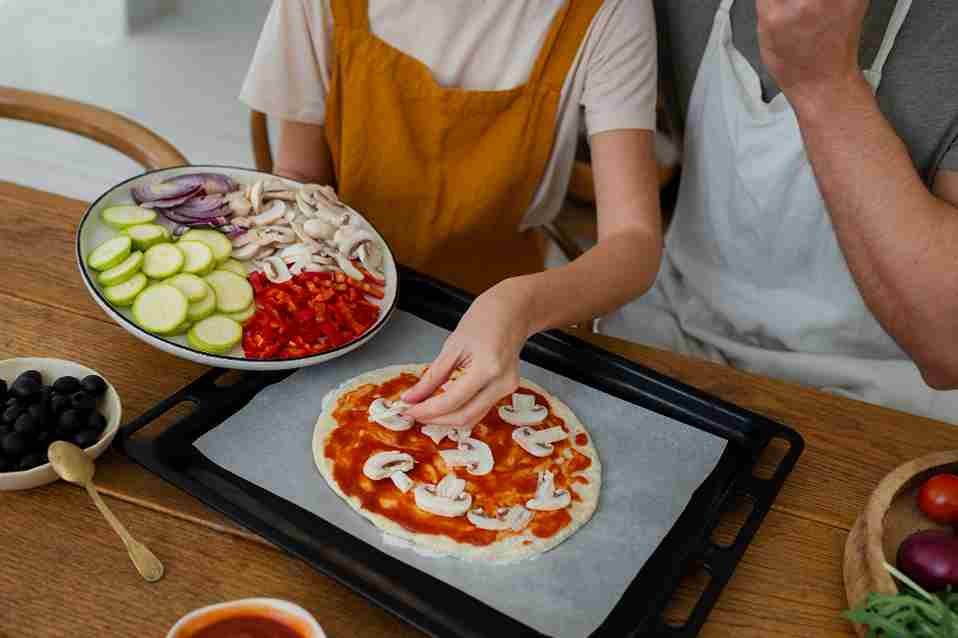
Equipment You’ll Need
- Pizza Stone or Steel: Preheat for 45 minutes at (500^\circ F) for a crispy crust.
- Pizza Peel: For easy transfer to the oven.
- Ooni Oven Alternative: Use a grill for high-heat baking.
Baking Techniques
- Stretch the dough evenly and place it on a floured peel.
- Par-bake the crust for 5 minutes before adding toppings.
- Bake for 8–10 minutes, rotating halfway for even cooking.
Common Homemade Pizza Mistakes and How to Fix Them
- Too Much Sauce: Leads to a soggy crust. Use less and spread thinly.
- Cheese Not Melting: Oven temperature too low. Increase to maximum heat.
- Dough Sticking: Dust with semolina flour to prevent sticking.
Nutrition and Health Benefits of Homemade Pizza
Homemade pizza can be a healthier alternative to delivery:
- Calories: 250–400 per slice, depending on toppings.
- Fiber: Add veggies for a nutrient boost.
- Lower Sodium: Control salt levels compared to store-bought options.
Pizza can be part of a balanced diet when made at home.
Storage, Freezing, and Reheating Homemade Pizza
- Storage: Refrigerate leftovers in an airtight container for 3–4 days.
- Freezing: Freeze dough balls for up to 3 months.
- Reheating: Use a skillet and oven combo for a crispy crust.
Variations: Gluten-Free, Vegan, and Air Fryer Homemade Pizza
- Gluten-Free: Use a gluten-free flour blend for the dough.
- Vegan: Substitute mozzarella with plant-based cheese and use a tomato-based sauce.
- Air Fryer: Cook small pizzas at 400°F for 10 minutes for a quick meal.
FAQs About Homemade Pizza
How long does homemade pizza dough take?
It takes 1–2 hours to rise, depending on the recipe.
Can I make homemade pizza without yeast?
Yes, flatbread-style pizza is a great yeast-free option.
What’s the best flour for homemade pizza?
00 flour or bread flour works best for a chewy crust.
Is homemade pizza cheaper than delivery?
Yes, it costs 70% less on average.
Key Takeaways
- Homemade pizza is fresher, healthier, and more affordable than delivery.
- Master the basics with easy dough and sauce recipes.
- Experiment with creative toppings and baking techniques for the perfect pie.
Conclusion
Making homemade pizza is a rewarding experience that combines creativity, flavor, and fun. With the tips and recipes in this guide, you’ll be able to craft delicious pizzas that rival your favorite pizzeria. Try it today and share your favorite toppings in the comments!