
Most homeowners buy a safe box at some point. It gets bolted to the floor of a wardrobe or tucked into a cabinet, and from that point on, there is a quiet assumption that the important things are covered.
That assumption deserves a closer look.
Home safe boxes are genuinely useful for certain situations. But there are gaps in what they can protect against, and those gaps tend to matter most precisely when you need protection the most.
What a Home Safe Box Gets Right
Start with what works.
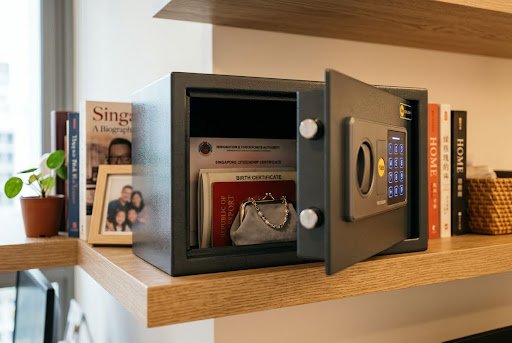
A properly rated safe provides real resistance against opportunistic theft. Most burglars are not equipped to crack a decent safe on the spot, and a bolted-down unit is not something you walk out with quickly. For petty theft or quick break-ins, a quality safe is a meaningful deterrent.
Fire resistance is another genuine benefit. Safes rated to UL Class 350 standard keep the internal temperature below the point at which paper ignites, for a defined period of time. A one-hour rating is the practical minimum for home use, and higher-rated models extend that window further.
For households with domestic helpers, tenants, or regular visitors, a safe also handles basic privacy. Sensitive documents, spare cards, and personal items stay out of reach from others in the home.
These are real advantages. The issue is not that home safes do not work. It is that homeowners tend to overestimate the range of situations they cover.
Where Things Get Complicated
No active fire suppression. A fire rating is a passive measure. It tells you how long the safe can hold out against heat before the contents are affected. It says nothing about whether anyone puts the fire out in time. Homes have no gas suppression systems, no professional sprinklers, and a standard fire extinguisher is not going to contain a room fire. If a blaze takes hold and burns for long enough, a one-hour rated safe still has a ceiling.
Determined theft is a different problem. Singapore’s crime rates are low by any global standard, but targeted residential burglaries do happen. There have been documented cases where homes with alarms, CCTV, and locked safes still resulted in significant losses. A safe resists entry for a limited time. A burglar with sufficient time, tools, and awareness of what is inside is a different threat from a casual opportunist. Lighter safes that are not properly anchored can simply be taken off-site and opened elsewhere.
Standard fire ratings do not protect digital media. Paper survives if the internal temperature stays below around 177 degrees Celsius. Hard drives, USB sticks, photographs, and CDs require considerably lower temperatures to survive intact. Most home safes are not rated for digital media protection. If you are storing anything on physical drives or memory cards, a standard fire-resistant safe may not save it.
The home environment itself is a risk factor. Purpose-built storage vaults maintain controlled conditions year-round. A home wardrobe does not. Over time, humidity fluctuations and temperature changes affect sensitive materials. For physical gold, the original packaging must remain intact for most institutional dealers to accept a buyback. For legal documents, physical deterioration can become an issue in court. These are slow risks, not dramatic ones, but they accumulate.
Human error happens more than people admit. Forgotten PIN codes, misplaced keys, and inadvertent override access are common enough that locksmiths field these calls regularly. Some electronic lock models have override procedures that are not as obscure as the owner assumes. If others in the household know the combination, the security profile changes considerably.
What This Actually Means for Your Valuables
Think about what you have stored, or plan to store, in a home safe box.
Everyday items like spare cash, a backup key, or a copy of your ID are well suited to home storage. Convenient to access, low stakes if the safe were somehow compromised.
Then there is another category. Original wills. Property title deeds. Physical gold or jewelry of significant value. Signed legal documents. Irreplaceable family documents. These are items where damage or loss creates problems that go well beyond inconvenience, sometimes legal ones, sometimes financial ones that take months to unwind.
For that second category, the honest question is whether a home safe box is genuinely the right tool for the job.
When Professional Storage Makes Sense
Home safe boxes are not meant to be replaced entirely. They serve a real purpose. But for valuables in the second category above, pairing a home safe with professional storage is the more prudent arrangement.
Private safe deposit facilities in Singapore have become considerably more accessible in recent years. STARVAULT, for instance, operates a fully automated facility where a robotic system delivers your box to a private room with no staff present. Access requires five separate authentication steps: facial recognition, card access, fingerprint scan, PIN code, and a physical key. The vault is built from steel-reinforced concrete, uses a gas suppression fire protection system, and sits 29 metres above water level. It is open every day of the year, including public holidays, with no bank account required to register.
The cost of renting a safe deposit box for a month is relatively modest. Set against the value of what you might be storing at home, the calculation is usually straightforward.
Getting the Balance Right
A home safe box is a practical purchase for most households. The issue is not whether to have one. It is whether you are relying on it for things it was not designed to handle.
For items you genuinely cannot replace, professional storage removes the variables that a home environment cannot control. Used together, both serve their purpose well.