
Italian kitchen cabinets have long shaped the global standard for refined craftsmanship and modern elegance. For interior designers, specifying Italian cabinetry is not only a stylistic choice but also a strategic design decision. These cabinets combine form, function, and engineering with a level of sophistication that elevates any residential or commercial project.
If your clients want a kitchen that signals luxury without excess, Italian design offers a balanced mix of simplicity, innovation, and architectural precision. Below are ten cabinet styles that continue to shape high-end interiors around the world.
1. High Gloss Lacquer
A signature of Italian kitchen design is the mirror-like clarity of high gloss lacquer finishes. These cabinets reflect light, brighten compact kitchens, and create a smooth and uninterrupted surface. Designers turn to high gloss profiles when they need a kitchen that appears sculpted rather than assembled. The aesthetic pairs well with polished stone, stainless steel, and minimal hardware for a clean contemporary look.
2. Matte Laminate with Ultra Smooth Touch
Matte laminate has become a favorite in luxury projects because it delivers a soft, velvety surface that resists fingerprints. Italian laminate technology focuses on durability and tactile appeal. Ultra-smooth matte finishes allow designers to offer quiet sophistication for clients who prefer non-reflective surfaces. Paired with integrated lighting, matte laminate adds depth and richness to a space.
3. Integrated Handle Profiles
Minimalism defines many modern Italian kitchens, and integrated handles support that seamless effect. Instead of traditional pulls, the handle becomes part of the door profile. This creates a cohesive flow across the entire cabinet run. For designers working on sleek open floor plans, integrated handle cabinets reduce visual noise and emphasize the geometry of the kitchen.
4. Natural Wood Veneers
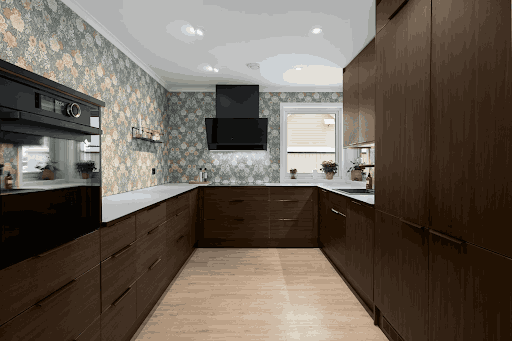
Italian kitchen cabinets often highlight the beauty of real wood with high-quality veneers. Walnut, oak, and ash are the most common choices, each offering a distinctive grain pattern that warms contemporary interiors. Italian wood treatment methods preserve the organic look while providing longevity and resistance to moisture. Veneer cabinetry works well in spaces where you want a mix of natural texture with modern forms.
5. Two-Tone Combinations
Two-tone designs continue to dominate luxury kitchens. Italian manufacturers excel at pairing materials that contrast yet complement one another. Common combinations include matte black with walnut, high gloss white with concrete gray, and stone texture doors with metallic accents. The two-tone approach helps designers define zones, emphasize vertical lines, or create focal points within larger layouts.
6. Floating Cabinet Systems
Floating cabinets give the kitchen an architectural lift. Wall-mounted base units create an open, airy environment that enhances lighting and showcases the flooring. Italian floating systems often incorporate LED underlighting to reinforce this sense of weightlessness. Designers use floating cabinets in contemporary homes, hospitality kitchens, and showroom-style spaces where visual impact matters.
7. Glass Front Cabinets
Glass finishes in Italian kitchens are about clarity and restraint. Frosted glass softens the look of heavy cabinetry, while smoked glass adds a refined, slightly mysterious aesthetic. Glass front cabinets also offer practical opportunities for displaying statement dishware or adding brightness to narrow layouts. Italian frames tend to be slim and precise, which preserves the modern silhouette.
8. Metal Framed Cabinets
Metal-framed doors and accent panels bring a sense of structure to the kitchen. Italian metalwork focuses on slim profiles in brushed brass, black steel, titanium, and champagne tones. These finishes support industrial chic interiors as well as polished luxury concepts. Designers choose metal framing when they want a sleek, architectural element that stands out without overpowering the rest of the design.
9. Modular Open Shelving
Italian modular shelving allows a kitchen to feel both functional and expressive. Open shelves break up long rows of cabinetry and create room for styling moments. Many Italian systems use aluminium framing combined with wood or glass shelves for a refined contrast. Designers appreciate the flexibility of modular solutions because they adapt easily to shifting client needs and layouts.
10. Stone and Ceramic Door Panels
A growing trend in Italian kitchen cabinets is the use of stone-inspired or ceramic door fronts. These surfaces combine luxury with extreme durability. They resist heat, stains, and scratches, which makes them practical for high-traffic spaces. Italian manufacturers excel at producing thin yet strong ceramic panels that mimic marble, limestone, or basalt. This allows designers to carry a continuous stone aesthetic from countertops to cabinetry for a unified, sculptural look.
Conclusion
Choosing Italian kitchen cabinets is an investment in long-term design value. Their finishes age well, their functionality supports everyday use, and their visual clarity aligns with current and future trends. When specified wisely, they transform a kitchen into a refined centerpiece of the home.
If you are a contractor or designer searching for a trusted manufacturing partner, consider working with OPPOLIA. OPPOLIA is a well-known furnishing manufacturer in Asia, offering whole-house solutions. If you want a supplier who delivers quality, consistency, and tailored project support, OPPOLIA is the best choice. Explore the full OPPOLIA Home collections and see what they can bring to your next project.