
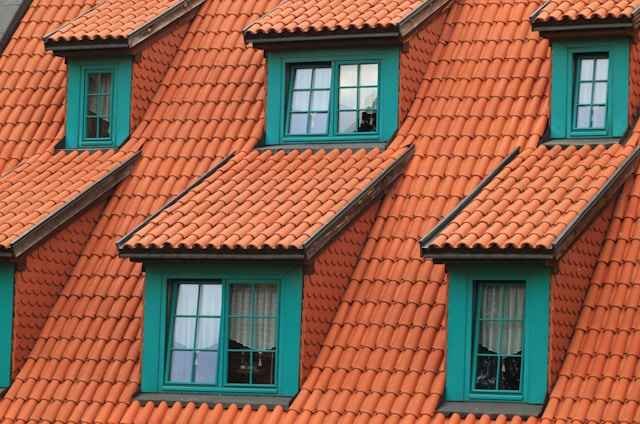
Most homeowners select their roof shingles like they choose their carpeting; they peruse a few samples, settle on a color, and call it a day. But the roof does more than provide a nice aesthetic from the curb; it’s a massive heat collector over your head, and what you select on it will directly impact your costs to keep your home comfortable.
It’s not that the science is complicated. It’s just rarely communicated and understood. Some selections genuinely matter for energy pricing while others sound good but barely scratch the surface.
Dark vs. Light: The Temperature Difference That Surprises
Dark colors absorb heat. Light colors reflect heat. It’s nothing new to anyone who’s worn a black t-shirt on a sunny day.
Yet what’s shockingly surprising is how much of a difference this makes relative to attic temperatures. An average dark roof can reach 160-170°F on a summer day while an average light roof can achieve only 120-130°F. That’s a 40° variance. Yet that’s not just surface temperature; that’s heat radiating down into your attic space, which further warms your entire house.
It overheats, and your air conditioning unit works against the grain to ensure you feel cool and comfortable inside. In fact, studies show that light roofing saves 10-15% on cooling costs in hot climates compared to dark roofs.
Where Dark Roofs Save Money
But here’s where it gets complicated; dark roofs save money in opposing climates.
In cold climates, dark roofs absorb solar heat. Instead of incurring higher heating costs, as many would assume, the attics tend to warm up; heating attics in winter is better than having them ice cold. This is why dark roofs are primarily seen in the northern regions where this is advantageous, and light roofs are primarily in the South – trial and error by generations.
It’s More than Color
But it’s more than just color. Two shingles that look identical could perform differently based on how they’re made.
Cool roofs use granulated technology that reflects more infrared radiation (the heat source) even when the shingle appears dark. A cool roof shingle compared to a standard dark roof shingle can be 20-30°F cooler than its counterparts of the same color. This technology works but comes at a premium price – 10-20% more than standard roof shingles.
But is that premium cost worth it? In areas where cooling costs dominate energy bills for most of the year, yes – it pays for itself in 5-7 years of replacements and renovations and professionals trained in energy performance can explain benefits of using premium materials – or not – before extensive work begins. A knowledgeable roof replacement contractor consulted early on can assess what claims are true for your home versus what is just marketing hype.
Adequate Attic Ventilation; The True MVP Most Homes Don’t Have Enough Of
Adequate attic ventilation might be the most underrated reason for increased energy costs in homes but most homes don’t have enough of it.
It’s simple to understand how ventilation should work: hot air rises! So in the summer, an attic becomes like an oven from the heat atop the roof. But with no ventilation, all that air stays in there radiating back down into your living space.
How Ventilation Works
Ventilation works by pulling hot air through exhaust vent systems near the peak and sucking cooler air through intake vent systems near the eave; thus keeping attic spaces closer to outdoor temperatures instead of 40-50 degrees higher.
It’s mathematical. For every 300 square feet of attic floor space, one square foot of ventilation should exist (split between intake/exhaust). Most homes don’t have enough. Older homes often built when codes were less strict rarely have enough and most newer homes barely have enough.
The Intake/Exhaust Balance Nobody Checks
Even those who do have enough aggregate vent area aren’t balanced (too much exhaust, not enough intake or vice versa).
But here’s what’s more important than which system you choose: balanced airflow! You want exhaust (from the peak) to roughly equal intake (near the eaves). When one is stronger than the other, pressure problems exist that will suck conditioned air out of your house or inhibit hot air from exiting a space.
Ridge Vents vs. Everything Else
Ridge vents are basically the go-to for exhaust systems as they run along the peak of a roof. They’re fine if they’re installed correctly but only if there’s enough intake in the eaves to keep airflow balanced.
The other systems, turbine vents (those spinning things), powered attic fans, or gable vents each have pros/cons – turbine vents easily move air and cost nothing, but they’re obnoxious and get rusty. Powered fans create great airflow movement but add powered costs and create moving parts that can malfunction.
The Soffit Vent Issue No One Thinks About
Finally, soffit vents provide intake airflow; however, they’re easy to block off with insulation if someone overcompacted those areas.
Check yours by going into the attic with a flashlight; if you can’t see daylight through them from the inside, they’re blocked off and not working. This is a common occurrence and easy fix!
But I Just Need More Insulation
Some people think that if they just insulate more, then ventilation won’t matter as much. But that’s backward.
Insulation slows down the transfer of heat, it does not eliminate it. Thus in summer with an attic at 150° and a conditioned home at 75°, that creates a continuous 75° differential working against insulation. The less hot an attic can be – thanks to ventilation – the less work insulation has to do!
Plus humidity! Ventilation stops humidity from piling up in an attic which provides less strain against decking and insulation alike – wet insulation reduces R-values – fiberglass loses nearly 50% R-value quality when wet!
Different Conditions Call For Different Priorities
All of this matters, but context provides priority.
For hot sunny climates: light or cool roofs make a gigantic impact, adequate ventilation is essential; reflective roofing equals paid back faster than anywhere else so shell out the cost as it pays off!
Cold climates are slightly different: dark shingles with winter snow create good thermal differences against ice damming as hotter roofs keep them from getting too cold; ventilation still helps – but it’s about warm attics instead of cooler ones in these cases.
Moderately Tempered Climates
Moderate climates: this is tricky as too many options are on both sides; medium-toned shingles seem to work best – use budget elsewhere to improve ventilation instead of going for premium reflective shingles, as payback time happens longer for those regions since they’re moderate temperature areas for most of the year.
But What’s The Real Impact?
The honest answer is there’s not going to be one decision that cuts your energy costs by half – but cumulative decisions over time reduce cooling costs by 15-25% each season at $200-$500 annually for an average-sized home.
Over years, that accumulates to something. Plus what’s more important is having increased comfortability day-to-day with home occupancy – they’re not just functionally beneficial from a utility perspective; they also avoid uncomfortable moments – this is where people fail by thinking it’s aesthetic alone instead of functional!