

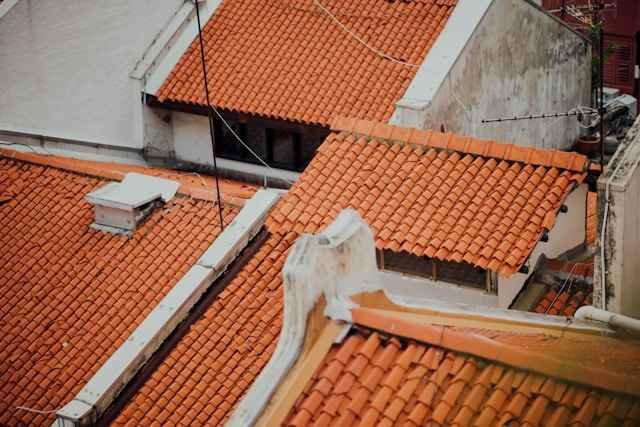
Leaks in the roofs are ranked among the most frequent and confusing problems of homeowners. The roof in the structure may appear as the obvious cause of concern, the shingles, the tiles, or the flashing, but what if the water damage you are observing in your house is not coming directly overhead? Most people do not know that leaks on roofs usually begin in areas they would never dream of, and hence, before the presence of the water is realized, the water has traveled a long distance. Learning about these concealed causes would enable house owners to clearly determine the actual problem behind the leaks on their roofs and deal with the problem before it causes severe consequences.
In this article, we will discuss some of the least expected sources of roof leaks that most people are not aware of, and shed light on how water can penetrate your home in the most unthinkable ways.
1. Chimney Flashing: A Silent Leak Culprit
Chimney flashing is among the most frequent but the least seen sources of a roof leak. The metal or rubber covering that is put around the bottom of the chimney is called flashing to keep the water out of your house. Flashing may also be spoiled with time through wear and tear, harsh weather, or even improper installation.
The problem with chimney flashing that makes it an easy source of leakage is the fact that the water might not be close to the chimney. Water may splash against the side of the chimney and may move along the roofing, appearing in your house in some unexpected places. This may make the homeowners headbang as they question how the roof above their fireplace could be the cause of the leakage. Unluckily, this has the consequence that the flashing repair is not done promptly, and as a result, more water damage and mold will be caused when it is not addressed.
2. Attic Condensation: The Hidden Water Issue
When you imagine roof leakage, the first idea that comes to mind is the water dripping into the ceiling when it is pouring. Nevertheless, attic condensation may lead to leakage in a much more insidious manner. In the cold seasons, the warmer air in your house is drawn to the attic. The warm air can cause condensation to take place when it contacts the cold surfaces of the attic roof, particularly when sufficient ventilation is lacking in the attic. In the long run, the attic condensation would fill the attic insulation and eventually result in dripping water to the ceiling beneath.
The main trick to discovering that there is attic condensation causing the leak is to notice whether there is any form of damp or mildew in the attic itself. When you realize these symptoms, then you need to handle the problem of ventilation and make sure that your attic is well insulated. The issue of condensation would still exist without proper ventilation and may lead to long-term damage to the roof as well as the interior of your home.
3. HVAC Line Exits: A Potential Leak Source
The HVAC is another source of roof leaks, which is hard to anticipate. Leakage through your heating, ventilation, and air conditioning (HVAC) system lines that run out of your roof is usually not given much consideration. The conditioned air is usually forced in and out of the system by these lines, which are usually taken out by the roof, and these are closed by means of flashing or rubber boots, as well as to prevent water from entering.
With time, there is a risk of the rubber boots or flashing that surround these exits of the HVAC lines wearing out because of weather conditions. Once the seal on the line is broken, the water may leak through the flashing and into the attic and leak out, leaving marks of water in the form of water spots on the ceiling or walls. Any cracks or gaps surrounding the line of the HVAC line can cause serious water damage when allowed to be in a condition of neglect.
When you are suspicious that your roof is leaking through the HVAC line exit, a professional roofing contractors can check the flashing and make sure it has been sealed correctly to avoid further complications.
4. Nail Pops: A Storm’s Hidden Damage
Another scoundrel, as far as roof leaks are concerned, is nail pops. In the event of shingles being nailed up, the nails are supposed to be flush with the roof surface. Nonetheless, with time, and particularly post-storms, the nails can start moving. As this occurs, the nails may protrude, leaving little space between the shingles. Such openings enable water to seep under the shingles and sub-layers.
It is especially found in nail pops that occur following the occurrence of a storm with significant winds because the power of the wind can cause the shingles and nails to be out of position. Water that gets in via these holes can move along the roof decking, after which it drips through the roof inside your house. The problematic aspect of nail pops is that they cannot be easily observed, as they might be covered by shingles, and the nails have not been popping out. This causes them to be a very easy-to-ignor source of roof leaks.
5. Shingle Uplift: Wind and Storm Damage
Shingle uplift is another problem that may cause roof leaks and normally takes place during storms. Strong winds have the ability of manufacturers of shingles to blow the roof covering off leaving the underlying covering to rain and water. Although the affected area is relatively small, the water may pass under the lifted shingles, resulting in leakage in the house.
Shingle uplift is a very problematic issue since it does not necessarily present itself. Homeowners might not realize that some of the shingles have been blown off or lifted after a storm, and only realize the issue after the water has started leaking through the ceiling. When you think that you have a roof leak due to shingle uplift, then it is imperative that a roofing contractor comes and conducts an inspection of your roof, to be sure that the shingles are well attached and that there is no damage behind the scenes
6. Ice Dams: A Wintertime Leak Hazard
Although this may appear to be a problem that only applies to colder climates, ice dams are a major contributor to roof leaks in places where there is a freezing climate. Ice dams are formed when the snow melts on the roof, which is normally a result of the heat loss in the attic. The meltwater drains down the roof, which is refrozen as it gets to the eaves, forming a dam. With further melting of the snow, the water accumulated behind the ice dam and leaks in the roof occur as the water flows under the shingles.
The ice dams may lead to serious water damage, not only to the roof but also to the walls and ceilings of the house. Ice dam prevention can be achieved by adequate attic insulation and ventilation, a factor that will facilitate controlling the temperature of the roof and prevent the melting and refreezing cycle that leads to the accumulation of ice.
7. Improper Gutter Installation: The Silent Leak Maker
Gutters can also cause roof leakage, though poorly installed or blocked gutters can increase the amount of water flowing off your roof. When the gutters are incorrectly positioned or when they are full of debris, the water that the gutters are supposed to divert might end up spilling on the roof, particularly during the rainy seasons. This water is in a position to creep in between shingles, creating leaks in unforeseen places.
The most important factor in stopping the damage of gutters by water is that they should be installed correctly and cleaned on a regular basis. With the help of a professional roofing contractor, you should check the condition and alignment of your gutters and recommend any repairs that should be done in order to avoid water leaks due to the improper flow of water.
Conclusion
Leaks on the roof are also irritating and annoying when one cannot easily see how the leakage has arrived. Water damage may also be very far off-site in most instances, either because of improper chimney flashing, condensation in the attic, or even HVAC line exits. Knowing these secret causes of leaks and worrying about the roof maintenance is one of the ways homeowners can save money and make sure that the roof is sealed against the elements.
In case you do not know what area of your roof is leaking or have a problem determining the cause of the leak, a qualified roofing contractor can help find where the leak originated. When you work on these concealed problems at the initial stages, you will save your house from greater water damage in the future.
For expert help with your roof, consider reaching out to experienced roofing contractors who can assess your roof’s condition and provide the necessary repairs.